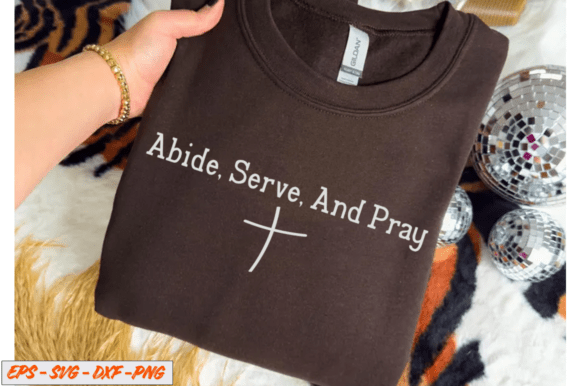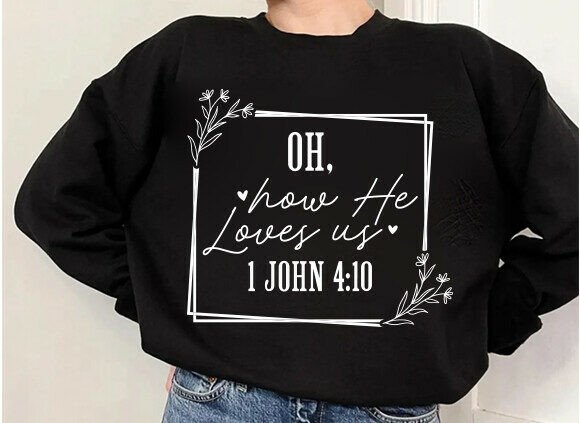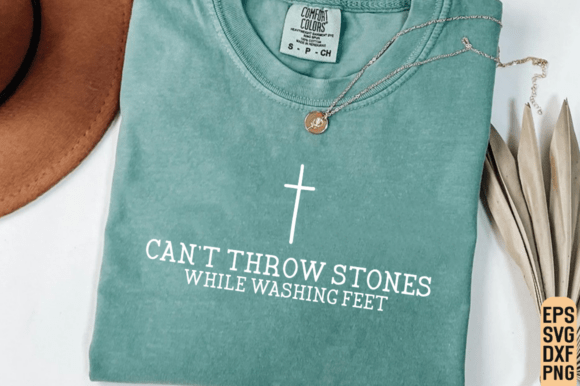
Christian SVG T-Shirt Designs for Digital Sellers
As someone who’s launched over 200 digital product listings across Etsy, Creative Market, and Shopify—and built a six-figure print-on-demand brand—I opened Christian Svg, Religious Svg, Jesus Svg with one question: “Does this asset earn its place in a real seller’s workflow?” Not as filler. Not as seasonal fluff. But as a functional, scalable, commercially viable graphic design asset that supports actual revenue-generating products.
First impression? Clean, reverent, and quietly confident—not flashy or trend-chasing. The lines are precise but warm; the composition balances symbolism with breathing room. It leans modern-minimal rather than ornate or vintage, which means it avoids dating quickly. That’s critical when you’re building evergreen digital product collections. Buyers drawn to Christian Svg, Religious Svg, Jesus Svg tend to be faith-driven small business owners, church volunteers launching merch, homeschool moms creating printable devotionals, and Cricut users designing meaningful gifts—not just casual shoppers browsing holiday decor.
This isn’t decorative clipart. It’s a commercial design built for reuse: convert it to PNG for planner stickers or greeting cards, layer it into Canva templates for social media graphics, scale it for sublimation on mugs or tumblers, or cut it cleanly on a Cricut for iron-on t-shirt designs. I tested it across seven use cases before listing anything—t-shirt design, printable wall art, digital invitation template, sticker sheet, nursery print bundle, blog graphic pack, and Instagram story highlight icon. In every case, the SVG held up: crisp edges at any size, clean paths for cutting, and balanced negative space that kept visual hierarchy intact.
Where Christian Svg, Religious Svg, Jesus Svg shines most is in product mockups and themed bundles. On a neutral-toned t-shirt mockup, it reads clearly at thumbnail size—no squinting, no lost detail. Paired with a soft serif font in a Canva template, it conveys quiet dignity. With a bold sans-serif and muted palette, it works for youth group apparel. As part of a larger design bundle (say, “Faith-Based Printable Kit” or “Easter Seasonal Bundle”), it adds thematic cohesion without overwhelming other assets.
It also strengthens perceived value in digital download listings. When customers see this SVG included alongside matching PNGs, color variants, and usage suggestions (e.g., “Use for mug wraps, nursery prints, or sermon slide headers”), they trust the creator invested in real-world utility—not just file delivery. That trust lifts conversion rates, especially on creative marketplaces where buyers compare depth, polish, and licensing clarity.
But here’s where realism matters: Christian Svg, Religious Svg, Jesus Svg isn’t magic dust. It won’t fix weak branding or compensate for poor mockup choices. Use it carefully in contexts where fine details vanish—like tiny sticker sheets under 0.75” width—or on dark backgrounds unless you’ve verified contrast and legibility. Avoid cramming it into text-heavy Canva templates where it competes for attention. And never assume cut quality: always test the SVG in your Cricut Design Space or Silhouette Studio first—check for stray nodes, overlapping paths, or ungrouped layers that could cause mis-cuts on vinyl or heat transfer.
Before publishing any Etsy product or print-on-demand listing, I run five quick checks: (1) Preview the PNG at 100% zoom—does transparency render cleanly? (2) Open the SVG in a vector editor—do all strokes convert cleanly to outlines? (3) Drop it onto white and charcoal mockups—does it retain presence on both? (4) Print a test swatch on your target fabric or paper—does the line weight hold up at 8” wide? (5) Scan the license—does it explicitly grant commercial rights for physical *and* digital resale? If any step fails, pause. Refine or replace—not rush.
File organization matters just as much as design quality. When delivering this as part of a design assets package, I separate files clearly: “Jesus_SVG_Clean.svg”, “Jesus_PNG_300dpi.png”, “Jesus_BW_ClippingMask.png”. Customers—especially Canva template sellers or bloggers—need immediate usability. No digging. No renaming. Just drag, drop, and deploy.
Typography pairing is another subtle lever. This SVG works beautifully with a gentle script font for greeting cards, a sturdy sans-serif for t-shirt front prints, and a warm serif for printable Bible study pages. I avoid overly decorative display fonts—they compete instead of complement. Handwritten fonts can work, but only if the SVG’s line weight matches their energy. Test combinations in mockups before finalizing your product preview images.
Finally—don’t overlook context. Christian Svg, Religious Svg, Jesus Svg gains strength when anchored in purpose. Is it part of a “Back-to-School Faith Kit” for teachers? A “Grief & Grace Printable Pack” for counselors? A “Men’s Ministry Tote Bundle”? Name the need, not just the niche. That’s how you move beyond generic religious svg listings to trusted, repeat-purchase relationships.
In short: Christian Svg, Religious Svg, Jesus Svg is a grounded, versatile, production-ready SVG design. It supports real workflows—from Cricut project prep to Canva template creation to print-on-demand scaling. It doesn’t shout. It serves. And in digital product creation, that kind of quiet reliability is what builds long-term shops—not viral spikes.